Guides
What is this black stone?
Black is the colour that gathers the most unrelated minerals. Obsidian, haematite and a lump of furnace clinker feel much alike in the hand — and three tests are enough never to confuse them again.
Updated September 8, 2026
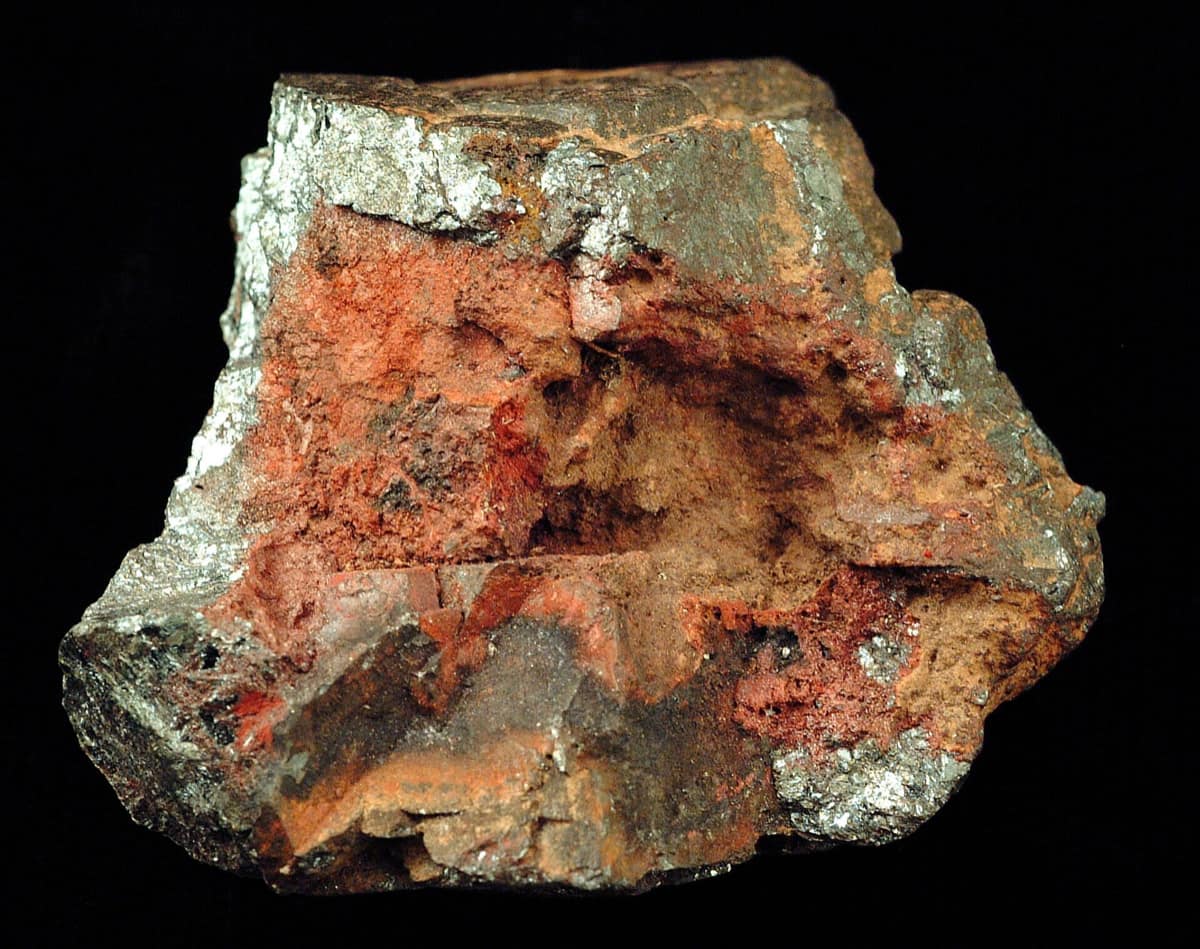
Black, along with grey, is the most misleading colour there is. It gathers a volcanic glass, several iron oxides, an igneous rock, a fossil coal and an industrial waste product — materials with nothing in common that, under the mud of a footpath, all look alike.
The good news: three tests almost always suffice. An edge held to the light, a magnet, a mark on porcelain.
The three questions to ask first
Is it translucent at a thin edge? Hold the stone between your eye and a window, looking along a ridge. Obsidian lets a brown or greenish glow through. Basalt, haematite and magnetite stay opaque all the way.
Does it stick to a magnet? A fridge magnet is enough. Magnetite grabs it decisively, some basalts respond weakly, clinker often does too. Obsidian, tourmaline, jet and onyx do not react.
What is the streak? On the back of a ceramic tile. This is the streak test, and on black stones it is the highest-yield of all: haematite gives away its red, magnetite stays black, jet gives brown.
The ten candidates
| Stone | Lustre | Hardness | Magnet | Streak | The sign that gives it away |
|---|---|---|---|---|---|
| Obsidian | vitreous | 5 to 5.5 | no | white | translucent at the edges, shell-like break |
| Black tourmaline (schorl) | vitreous | 7 to 7.5 | no | white | elongated prisms, striated lengthwise |
| Haematite | metallic | 5 to 6 | weak | red-brown | the red streak, and the weight |
| Magnetite | metallic | 5.5 to 6.5 | strong | black | sticks to a magnet without hesitating |
| Basalt | dull | about 6 | variable | grey | fine-grained rock, often bubbly |
| Jet | resinous, dull | 2.5 to 4 | no | brown | very light, warm to the touch, nearly floats |
| Onyx | vitreous to waxy | 7 | no | white | regular parallel banding |
| Black jasper | waxy | 7 | no | white | opaque, conchoidal fracture |
| Coal / anthracite | vitreous to dull | 2 to 3 | no | black | marks the fingers, very light |
| Clinker (slag) | vitreous to dull | variable | often | variable | bubbles, poured shapes, looks like waste |
The confusions that come up most
Obsidian and clinker. This is pairing number one, and it catches a great many people. Clinker is the vitrified residue of burnt coal: it turns up wherever there was a works, a forge, a boiler house or a steam railway. It is glassy, black and brittle — like obsidian. The difference is the bubbles: clinker is riddled with them, often irregular and stretched. Natural obsidian is massive and homogeneous; when it does hold bubbles they are sparse and spherical. Context settles it too: obsidian is of recent volcanic origin, and there is none in a sedimentary lowland soil.
Obsidian and tumbled bottle glass. On a beach or in a river, a shard of dark glass polished by water looks a great deal like an obsidian pebble. Look for an even curvature of constant thickness, a trace of moulding, a too-decidedly green tint: that is a bottle. The obsidian page covers the other markers.
Haematite and magnetite. Both black, metallic, heavy. The magnet separates most samples; the streak settles every remaining case, since haematite gives red-brown whatever it looks like.
Black tourmaline and obsidian. Tourmaline forms elongated prisms with a rounded triangular section, striated lengthwise — a very recognisable texture once you have seen it. It is also markedly harder: it scratches glass effortlessly, obsidian does not.
Jet and coal. Both are of plant origin and very light. Jet is harder, takes a good polish and leaves a brown streak; coal is friable, dirties the fingers and leaves a black streak.
The meteorite question
It comes up with every heavy magnetic black stone, and the honest answer is almost always no. Very nearly all "meteorites" submitted to laboratories turn out to be magnetite or clinker.
What argues against a meteorite:
- Bubbles. A meteorite has none. A vesicular black stone is clinker or a volcanic rock.
- A rusty or granular surface. The fusion crust of a fresh meteorite is black, dull and smooth, sometimes with hollows resembling thumbprints.
- A red streak. That is haematite.
- A perfectly aerodynamic shape or a point. Contrary to intuition, meteorites are rarely tapered.
What argues for: very high density, decisive magnetism, a complete absence of bubbles, a dull black crust, and — the deciding criterion — nickel in the iron, which only a laboratory can see. No app, ours included, can determine that from a photograph.
Frequently asked questions
How do I know whether a black stone is obsidian?
Look at a thin edge against the light: obsidian is translucent, very dark brown or green, never fully opaque. Then look for a smooth curved shell-like break — conchoidal fracture. A black stone that stays opaque to the edge and breaks roughly is not obsidian.
A heavy magnetic black stone — is it a meteorite?
Almost never. By far the two likeliest answers are magnetite, an iron mineral common everywhere, and clinker, the residue of burnt coal found on every former industrial site and along old railway lines. Clinker gives itself away by its bubbles; a meteorite has none, and shows a dull fusion crust with thumbprint-like hollows.
Which black stone shines like glass?
Obsidian, which is literally volcanic glass. Black tourmaline also shines, but in elongated prisms striated along their length, never in glassy shards. And polished haematite shines with a metallic lustre, closer to steel than to glass.