Guides
The streak test
A mineral can change colour from one deposit to the next. The colour of its powder does not move — and an upturned bathroom tile is all it takes to read it.
Updated September 8, 2026
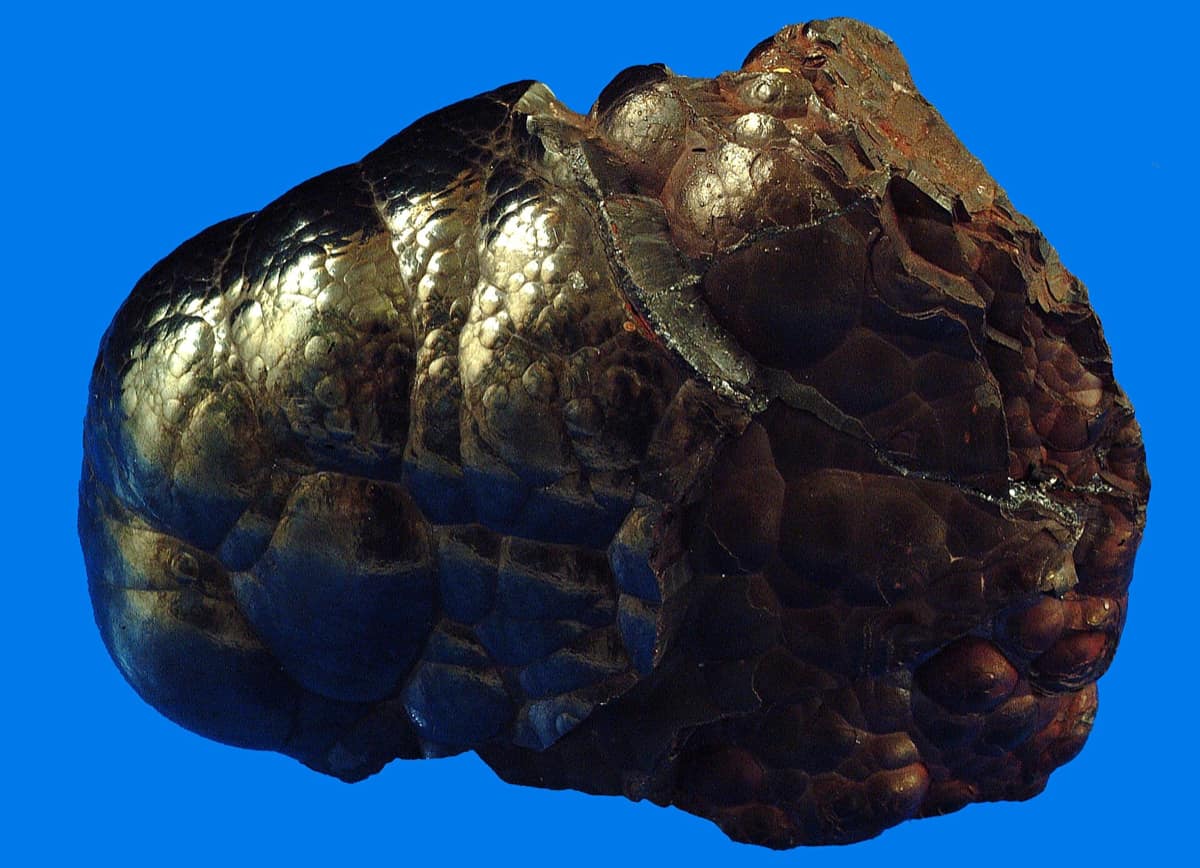
A mineral's colour depends on its impurities, on how weathered it is, on the light you look at it in. The colour of its powder depends far less on any of that. It is why mineralogists crush a little material before concluding — and why the streak test, which does the same thing in one gesture, is well worth the tile it asks for.
What you need
A plate of unglazed porcelain. In a mineralogy shop it is called a streak plate and costs a few euros. At home it is free:
- The back of a ceramic tile. The visible face is glazed, the back is not. Same material, same hardness.
- The foot of a cup or plate. The ring the piece rests on is left unglazed so it does not stick in the kiln.
Do not use a glazed surface: the glaze is smooth and vitrified, and it will take nothing off.
The gesture
Hold the plate flat on a table. Press the stone against it and pull firmly over three or four centimetres, once. Look at the mark in daylight.
Two precautions:
Clean the stone first. A film of oxide or mud leaves a streak of its own, and you would be reading the colour of the dirt.
Blow across the mark, or brush it with a finger. Loose dust is not a streak. What stays embedded in the grain of the porcelain is.
If the stone scratches the plate instead of leaving powder on it, stop: you have just learned that it is above 6.5 on the Mohs scale, which is a finding in its own right.
The streaks that settle a question
| Mineral | Appearance | Streak |
|---|---|---|
| Haematite | black, steel grey or red | red-brown, always |
| Magnetite | metallic black | black |
| Pyrite | brass yellow | greenish black |
| Chalcopyrite | golden yellow, often iridescent | greenish black |
| Gold | yellow | yellow, shiny |
| Galena | lead grey, very heavy | lead grey |
| Limonite / goethite | brown, ochre | yellow-brown |
| Cinnabar | red | scarlet |
| Malachite | green | pale green |
| Sphalerite | resinous brown to black | pale brown to yellow |
Three readings of that table are worth underlining.
Haematite is the textbook case. It turns up as black masses, as red nodules, as steel-grey flakes — three appearances with nothing in common. The streak is red-brown in all three. It is that test, and not the colour, that names it.
Streak separates gold from pyrite for good. One leaves a bright yellow powder, the other a greenish-black one. There is no possible ambiguity, where the bulk colour has misled people for as long as there have been prospectors — which is where "fool's gold" comes from, detailed on the pyrite page.
Magnetite and pyrite both leave black. Streak does not do everything: here the bulk colour and magnetism decide. A fridge magnet picks up magnetite, not pyrite.
Its limits
The streak test is worthless above 6.5, which rules out the whole quartz group — amethyst, agate, flint, jasper, chalcedony, citrine. Those minerals do not wear on the plate, they mark it.
It is also uninformative for many pale non-metallic minerals, whose streak is simply white: quartz, feldspar, calcite, gypsum and fluorite all leave white or colourless powder. A white streak says only one thing, and that is already something: this is not a metallic mineral.
In other words, streak is a specialist's test. It tells you almost nothing about a pale translucent stone, and it is decisive on a dark, heavy, shiny one. That is exactly where the eye fails hardest — which makes it the natural complement to hardness rather than its competitor.
Frequently asked questions
What can I use for a streak test without a mineralogist's plate?
The unglazed back of a bathroom tile works perfectly: it is exactly the same material, at the same hardness of about 6.5. The foot ring of a porcelain cup or plate, where the glaze stops for firing, does the job too.
Why do some stones leave no streak at all?
Because they are harder than the plate, which sits at about 6.5 on the Mohs scale. Quartz, topaz and corundum scratch porcelain instead of wearing away on it. The absence of a streak is therefore information in itself: the stone is above 6.5.
Is the streak always the same colour as the stone?
No, and that is the whole point of the test. Black or grey haematite leaves a red-brown streak. Yellow pyrite leaves a greenish-black one. Minerals with a metallic lustre are where the gap is widest — and they are also the ones people confuse most.